Category: Preservation

The new Season of Classic Films to be presented at Festival Lumière

After the success in 2019 with more than 15.000 people participating, ‘A Season of Classic Films’ is back for its second edition in December.

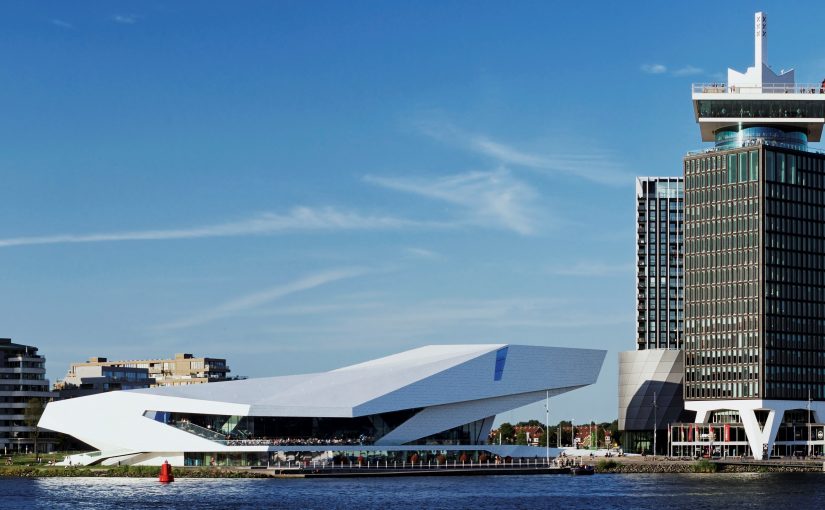
Led this year by the Association des Cinémathèques Européennes (ACE) with the funding of the European Commission under the cross-sectoral strand of Creative Europe programme, this initiative will be presented on 15 October at the Festival Lumière in Lyon. The festival, focusing on the history of cinema, will host a special afternoon around ‘Europe and Heritage’ where Sandra den Hamer, ACE president and Eye Filmmuseum director, and Maria Silvia Gatta, representative from the European Commission DG CNECT, will explain the details of the outreach project and other policies and trends to keep supporting and modernising European film heritage.

The second edition of the Season of Classic Films will consist of a series of free screenings planned between December 2020 and June 2021 across Europe to raise awareness of the work of European national and regional film archives, especially among young adults. Most of the films are new digital restorations and some screenings include exciting elements such as live performances and experimental electronic music. With 22 participating institutions, this initiative particularly aims to support the reopening of European film archives, all affected by the Covid19 crisis.

A map including the list of cities and films will be soon available via this page.

Read more

‘A Season of Classic Films’ to be presented on Monday 31 August at Il Cinema Ritrovato


Gian Luca Farinelli, on behalf of Sandra Den Hamer (ACE’s President), will announce on Monday the Season of Classic Films initiative at Il Cinema Ritrovato festival.

This will happen during the conversation between Thierry Frémaux and Gian Luca Farinelli on Monday 31st at twelve o’clock at Cinema Lumiere (Sala Officinema/Mastroianni). At the end of the conversation Gian Luca Farinelli will present the trailer of the project.

It’s possible to follow the event online on the Festival’s streaming website:
https://www.mymovies.it/ondemand/cinema-ritrovato/

and also on ACE’s FB page:
https://www.facebook.com/AssociationdesCinemathequesEuropeennes/

Read more

The Brilliant Biograph: Earliest Moving Images of Europe (1897-1902)

Eye Filmmuseum and the British Film Institute present a compilation film of newly-restored rare images from the first years of filmmaking. Immerse yourself in enchanting images of Venice, Berlin, Amsterdam and London from 120 years ago. Let yourself be carried away in the mesmerizing events and celebrities of the time, and feel the enthusiasm of early cinema that overcame the challenge of capturing life-like movement.


Origins

The Mutoscope and Biograph Company was founded by film pioneer and inventor William Kennedy-Laurie Dickson, who had worked with Thomas Edison since the 1880s. After leaving Edison, Dickson and partners filmed remarkable events across Europe.

These films are all photographed with the unique large-format 68mm Mutograph camera, which provided extraordinarily high resolution images. These one-minute time capsules from 120 years ago still convey some of the richest and sharpest images that film can achieve.

The films reflect the essence of early cinema: capturing the first ever moving images of important events, famous locations and personalities, as well as spectacular moments such as dance and sports performances, or even natural phenomena like fire or storm, that only work when seen in motion.


The Collection and Restoration

The Mutoscope and Biograph Collection is the oldest film collection held at Eye Filmmuseum. It includes over 200 films, most of which made in Europe between 1897 and 1902. This constitutes the largest existing collection of Mutoscope and Biograph films surviving in the world.

The films are shot on nitrate film stock with a short-lived technology which was, at the time, innovative and groundbreaking: an exceptionally large-format film (approx. 68mm wide, without perforation) with an extremely high resolution providing extraordinary richness of details.

Because the films are a non-standard size, they have been largely unseen. Given their obsolete format digital restoration with custom-made equipment at a resolution of around 8K is the best way to make them accessible again, using today’s technology. After digitization, image restoration is done to reproduce as closely as possible the characteristics of the original film.

Read more

IMF Archive Workshop

EYE Filmmuseum

Making movies is costly and time-consuming. Preserving them is critical.

The IMF UG invites you to join worldwide experts around program focused on the needs of public archives for the preservation of movies, and the applicability of the Interoperable Master Format (IMF) in these applications. The workshop will take place on the 13th September from 1pm–5pm at the Eye Film Museum, 1 IJpromenade, 1031 KT Amsterdam in the Top of the Roof room.

The program is now online at https://www.imfug.com/events/2019-09-13-workshop-preserving-movies-with-imf/

Access is free but limited up to specific number. Registration for the event is necessary and can be done at https://imf-in-archives-ibc-2019.eventbrite.com


CEN TC457 Presentation in Bologna

Photo: third meeting of the CEN/DIN TC 457 in October 2018 in Berlin

The CEN TC457 project team is pleased to invite you to a presentation in Bologna on the progress of our work on the CEN Preservation Package aimed for the digital long-term archiving of films.
The 50 minute session will start with a 20 min presentation on the concepts and ideas for this digital long-term archive format followed by a panel and a discussion with the audience.
It will take place on Monday 24 June at 11:00 am at the DMS auditorium, Piazzetta Pier Paolo Pasolini, Bologna.
We are looking forward to see you there.

68mm Mutoscope and Biograph from the Eye Filmmuseum collection

The films of the Mutoscope and Biograph are quite special. Not only because they are very old and rare, but also because of their exceptional image quality.

The films of the Mutoscope and Biograph are the oldest films in the Eye vaults. The collection of Mutoscope and Biograph films consists of 200 films of approximately one minute each. The films are quite rare, only the British Film Institute has a similar smaller collection.
The films were shot on a very large format that was quickly outdated, but which yielded spectacularly beautiful images: 68mm. Apart from the format, the material is unusual because it doesn’t have sprocket holes, so the image fills the entire width of the film strip. This produces an image quality that is comparable to IMAX – 8 to 16K in digital terminology.

Most 68mm films contain rare images from various locations in Europe, with an image quality that after 120 years is still one of the best that film can transmit.

Watch film

Film Restoration and Digitisation – EU Funding Available

As a follow-up of the European Year of Cultural Heritage 2018, the European Commission will support the restoration of at least 4 heritage films. The total available budget is 320 000 €.

European Year of Cultural HeritageThis project is managed by Creative Europe MEDIA and we are now gathering proposals for restoration and digitisation of films with a recognised value and a potential to find audiences in various EU states.

The EC grant can cover either the full restoration process or part of it (the grant can be accumulated with other sources of funding).  The expected final product must include subtitles in the 24 official EU languages. An audio description is also encouraged. The deadline for delivering the final product (a remastered version of the film ready to be screened) is 31.10.2019.

Read more

Call for Tender for a Project Expert for the preservation of digital cinema

The third Call for Tender for preservation of digital cinema has been put on the Homepage of the DIN Standards Committee Entertainment Technology, Photography and Cinematography (NVBF).

https://www.din.de/en/getting-involved/standards-committees/nvbf/news/cft-preservation-of-digital-cinema-en-261552

The purpose of this call is to find a film archive representative – project team expert 5 – for the Project Team which will be in charge of the bulk of the practical work in this standardisation project.

The tasks of the project team expert 5 include:

  • Taking part in project team meetings (at least at 3 month intervals) to discuss results and next steps, to monitor progress and results, in order to ensure the agreed timeline
  • Evaluating standards and collecting requirements regarding film archives together with expert 4
  • defining the archive framework together with expert 2 and expert 4
  • Describes common workflows in film archive processing together with expert 3 and expert 4
  • Supports project group with requirements of film archives, especially make recommendations on legal deposit and workflow implementations
  • Supports PT leader and expert 3 and expert 4 in assessment of results of software development team according to the specifications
  • Discusses project results with experts from service providers and archives, gives feedback to the project team and delivers comments back to the project team
  • Supports project group with knowledge and descriptions of workflows in film archives
  • Dissemination of the progress and result to the archive and postproduction community
  • Taking part in the meetings with the development team, which will be held on a regular basis in order to discuss results with the development team, getting feedback on changes requested, identifying the effects on changes in the software to the draft and in order to ensure a good collaboration with the development team

The deadline for tenders is the 21st January 2019.

Film Storage and Preservation – ACE Session

Tuesday June 26th, 2018 – h 14.30

ACE Session at the FIAF Film Restoration Summer School:

Film Restoration

  • Thomas Christensen (Curator, DFI)
  • Mikko Kuutti (Deputy Director, KAVI)
  • Nicola Mazzanti (Director, CRB)

present their classic curriculum on film preservation from analogue preservation principles via Digital 101 aka the Pixel to zoological references in restoration.

The session will take place at Auditorium – DAMSLab
@ Piazzetta Pier Paolo Pasolini 5/b (via Azzo Gardino 65/a) – 40122 – Bologna – Italia

DAMSLab - Auditorium © Università di Bologna